

The Best Squat You’ve Never Done: No-Hands Barbell Squat
Dr. Joel Seedman, Ph.D.
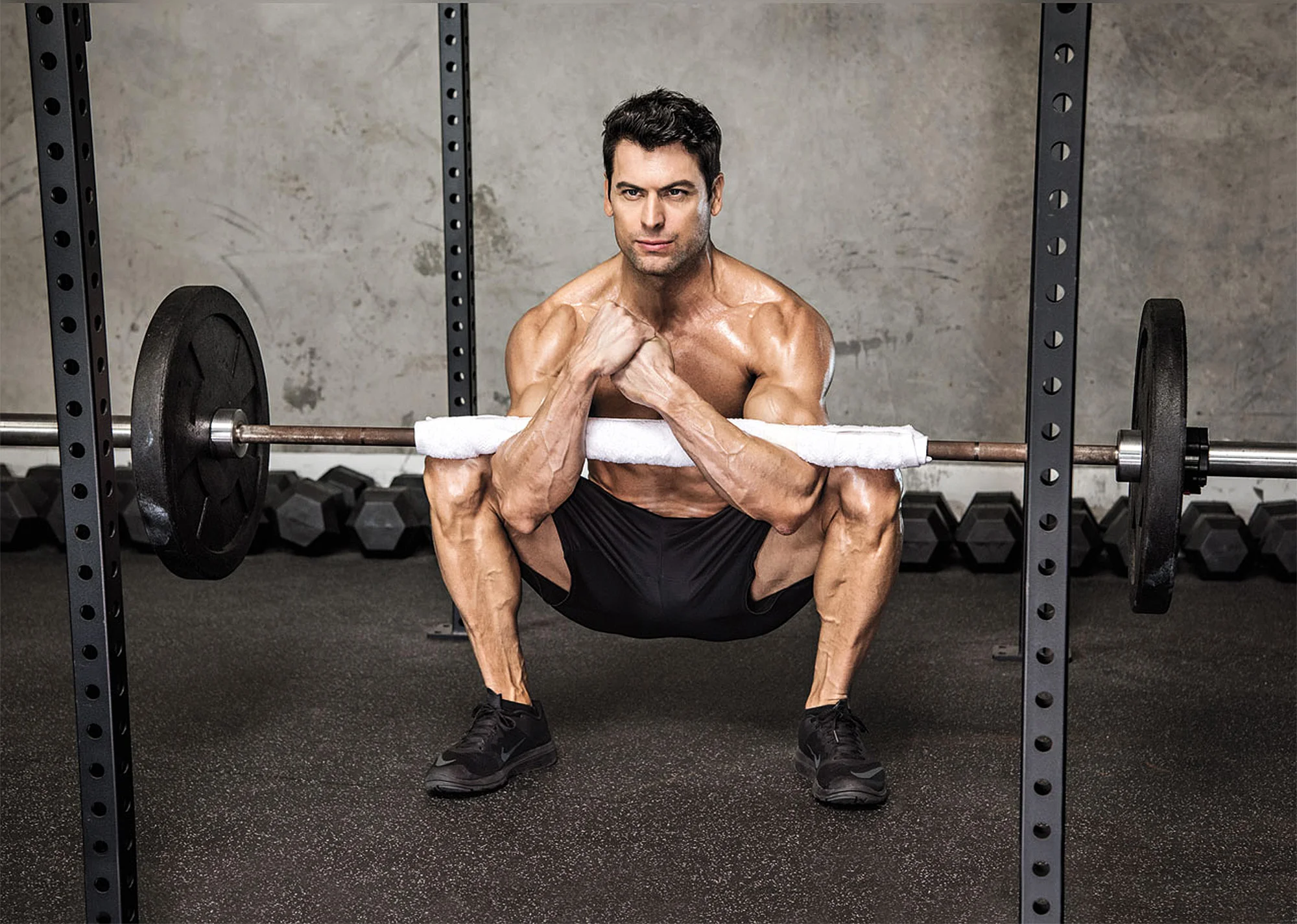
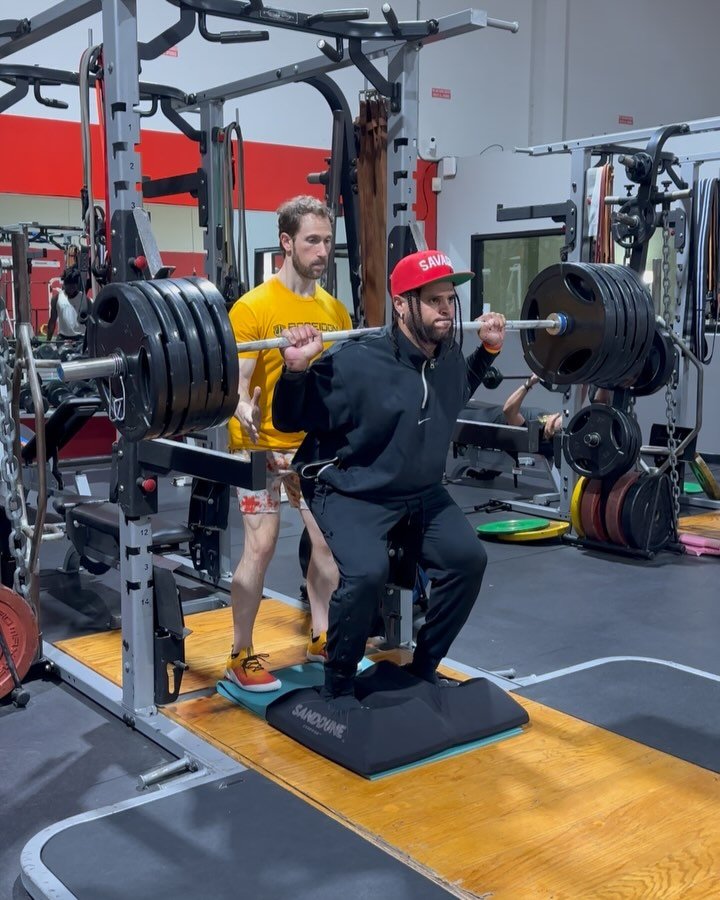
Look Ma, no hands!!!!! That’s right, in today’s article I’ll be discussing the effectiveness of a protocol I refer to as the no-hands barbell squat. And no it’s not a magic act or circus trick but actually a very legitimate squat variation. In fact the no-hands barbell squat not only acts as a great diagnostic tool for exposing various squat aberrations it also acts as an effective squat drill for correcting these issues while simultaneously hammering your legs.
With that said perfecting your squat technique is never an easy feat. While it requires a number of important coaching cues, instructional techniques, and sensory integrated movement, using unique squatting variations that force the lifter to assume textbook mechanics is also quite helpful. The no-hands barbell squat is just that. I should point out that this is a very advanced and difficult variation that should only be used by experienced lifters as it requires a solid foundation of movement efficiency and motor control before attempting.
Here are 15 reasons why the no-hands barbell squat is not only one of the best tools for cleaning up your squat technique but one of the best squatting variations period.
1. Although there are numerous reasons why the no-hands barbell squat helps dial in squatting mechanics, perhaps the most significant factor is that it forces the lifter to employ the single most effective training protocol I’ve ever used namely the eccentric isometric protocol. Stay tuned for my eccentric isometric book coming out very soon!
Eccentric isometrics involve a slow negative followed by a pause in the stretched position all of which help maximize proprioception and sensory feedback. This allows the lifter to fine-tune their mechanics and make subtle adjustments needed to master your technique. In fact unless you perform the no-hands barbell squat with eccentric isometrics it will literally be impossible to maintain control of your body or the barbell. As a result the eccentric isometric technique combined with the incredibly volatile nature of the no-hands barbell protocol reinforces nothing short of textbook mechanics.
2. A proper squat requires just the right amount of torso lean of approximately 20-30 degrees. The no-hands barbell squat teaches this perfectly. Too much forward lean with excessive hip flexion and the barbell will roll onto the neck. Too upright of a position without ample forward torso lean and the bar will roll down and off the back.
3. Similar to the point above, a proper squat involves ample hip hinge mechanics to create a proper forward torso lean. Unless sufficient hip hinge technique is employed the lifter will be unable to perform this squat without losing control of the barbell.
4. As previously highlighted a solid squat involves a moderate forward torso lean and hip hinge throughout. As a result this eliminates significant anterior knee drift and teaches the lifter to sit back throughout the movement. If you’re still not convinced this represents optimal squat form just try the no-hands barbell squat and you’ll quickly realize that this cue along with every other cue mentioned in this article are correct.
5. The no- hands barbell squat may be one of the single best exercises for eliminates squatting asymmetries. If the lifter favors one side, twists their torso, or leans to one side the barbell will tilt or roll making it impossible to perform the movement. Whether it’s symmetrical positioning or symmetrical loading the no-hands barbell squat represents the perfect tool for optimizing these attributes.



6. I’ve said it before and I’ll say it again. A proper squat for any human being involves depth somewhere between 90-degrees and parallel (110 degrees). Going significantly past these joint angles represents faulty mechanics plain and simple. If you’re still not sold just try the no-hands barbell squat as you’ll be forced to stop somewhere at 90 degrees and parallel as well as eliminate any tendency to collapse in the bottom position.
7. If you want to optimize spinal alignment, posture, and eye gaze then you’ll definitely want to give the no-hands barbell squat a try. Any significant degree of spinal flexion, excessive lumbar extension, cervical hyperextension, or spinal misalignment will be immediately punished with the barbell moving, tilting, and shifting. This also has a positive impact on the eye gaze as it teaches the lifter to look out and slightly down which represents proper gaze during the squat.
8. Proper upper body mechanics is a critical component for sound squatting mechanics. In addition, the upper shelf created by the traps, shoulders, and upper back muscles is pivotal as it provides the perfect position to lock the barbell into. The no-hands barbell squat literally forces a perfect shelf position as the upper back, traps, and lats must be contracting aggressively to anchor the bar into a precise position. Lack of proper shelf positioning will make it impossible to hold the bar in place as there’s literally nothing else that locks the bar in for the lifter. I’ve found that using a hand and arm position similar to a safety bar squat helps dial this in best.
9. No other barbell back squat variation will crush your core to the level of the no-hands protocol. Any lapse of core activation for even a split second will cause the lifter to loose spinal rigidity and control of the barbell. If you have trouble feeling your core fire on back squats, this is the perfect solution.
10. Besides helping to maximize motor control, the intense core activation achieved from the no-hands protocol also helps eliminate excessive lumbar arch and spinal hyperextension commonly witnessed on squats. As a result this not only teaches sound squatting mechanics it also helps minimize pressure to the low back and spine.










11. Learning how to stay tight and use smooth and controlled motions during a squat is something many lifters struggle with. The no-hands barbell squat minimizes momentum and jerky mechanics as well as any tendency to lose tightness as any of these flaws will significantly destabilize the barbell making it feel impossible to lock in.
12. If you’re looking for a barbell squat variation that saves the shoulders not to mention the elbows and wrists, look no further than the no-hands squat technique. In fact, the position required to dial in your squat is nearly identical to a safety bar squat (commonly used for shoulder issues) only there’s even less tension on the shoulder joint as absolutely no pressure is placed on the upper extremities. However you can expect some significant intramuscular tension to the upper back and traps which happens to be quite therapeutic on the glenohumeral joint.
13. The level of mental focus, concentration, and overall intensity needed to perform the no-hands squat is higher than just about any lower body exercises you’ll ever perform. Be ready to focus your mind like a Jedi as nothing short of ninja-like concentration will suffice for these incredibly challenging squats.
14. Finding squat variations that tax the legs yet minimize tension to the joints is never easy. However the no-hands squat protocol provides just that as it produces an intense leg stimulus with markedly reduced loads. In fact you’ll most likely use half the load you would typically handle on barbell squats yet you’ll experience even more tension than normal in the quads, glutes, and hamstrings.
15. One thing you’ll immediately notice when performing the no-hands barbell squat is that it’s impossible to lock out fully at the top position as doing so will cause the bar to roll off your back due to the elimination of the forward torso lean. The level of constant tension, metabolic stress, and intramuscular tension produced from this protocol creates an enormous burn throughout the entire lower body. As a result the no-hands barbell squat is incredibly potent for stimulating functional strength and hypertrophy throughout the entire lower body not to mention the upper back and core.
No-Hands Barbell Lunge and Split Squat
The no-hands barbell protocol is not only remarkably effective for reinforcing sound squat mechanics but it also does wonders for perfecting lunge and split squat mechanics. Besides instilling the 15 aforementioned cues discussed above for the barbell squat, which also apply to the lunge, the no-hands barbell lunge requires optimal forward lean and hip hinge mechanics which happens to be one of the most critical components of proper lunge and split squat mechanics.
Here’s one of my awesome clients Leslie Petch showing how it’s done using the highly effective eccentric isometric protocol.
Most lifters stay overly upright when performing lunges and split squats. Not only does this technique aberration minimize stress to the targeted musculature but it also places undue stress on the joints as the body is not in an ideal position to produce or absorb force. Fortunately the no-hands barbell lunges addresses this issue almost immediately as an overly upright torso position will cause the bar to slide off the back. In addition, it forces the lifter to use very smooth and controlled form while eliminating any jerking or asymmetrical shifting that commonly occurs during lunges. Just be prepared for a serious burn not only in your quads, glutes, and hamstrings but also your core and upper back.
No-Hands Barbell Good Morning
Similar to the squat and lunge, the no-hands eccentric isometric barbell protocol is also incredibly effective when applied to the good morning exercise.
One of the most common mistakes I see people make when performing good mornings is they allow their shoulders to roll over at the bottom either because they don’t keep their upper back tight or they collapse and go too deep in the bottom position. In either case, the no-hands good morning will expose and correct these issues along with any other form aberrations as the level of precision required to nail these is through the roof.
As an added bonus your core is required to fire at an incredibly intense level. This helps minimize low back tension and excessive lumbar arch that so many individuals experience during the good morning exercise. Similar to the squat and lunge you’ll also need to perform these with an eccentric isometric protocol as anything but will make it impossible to control the highly volatile barbell. Oh and just in case you were wondering the glutes and hamstrings get pulverized from these as the level of smooth and continuous tension placed to the backside is inordinately high.
Practical Application
I highly recommend starting with an empty bar on each of these no-hands barbell exercises. Once you master your form you should be able to progress to roughly 50-60% of the load you would typically use for the traditional variations of those movements. I also recommend lower rep ranges as the time under tension required for each rep is quite high. Therefore several sets of 3-5 reps will suffice for stimulating functional strength and hypertrophy as well as dialing in your lower body mechanics and muscle function.
If you’re looking for a training program that teaches you how to implement unique squats, lunges, and hinges into your routine check out my Complete Templates.

Everyone squats the same regardless of individual differences and joint anthropometrics. A proper squat involves 90 degree joint angles and is most easily obtained by using eccentric isometrics with perfect posture and body alignment. Here are 101 truths everyone should know.

The sissy squat has recently gained quite a bit of popularity in mainstream fitness and bodybuilding. Unfortunately it’s not only an inferior quad and thigh builder that lacks proper muscle stimulation, it destroys the knees. Here are 12 superior alternatives to sissy squats.

Fitting upper body isolation exercises into your training routine can be tricky particularly when you’re looking to emphasize larger compound movements in your lifting program. Here are my favorite ways to crush your arms while saving time and improving functional performance.

Offset loading training is one of my favorite strength training techniques not only for eliminating imbalances, asymmetries, and muscle dysfunction, but also for building ridiculous levels of functional strength, hypertrophy, motor control, and core stability. Read more here.

Although I use a variety of squats and lower body drills with my clients particularly eccentric isometrics, there’s one squat variation I tend to use with just about every client due to its simplicity and effectiveness - namely, the front curled squat.

The belt squat is an amazing exercise that crushes the legs and you can make it even better by combining it with front rack kettlebell squats and goblet squats. Here are multiple variations you can use to induce functional mass in the legs.

Looking for a quick solution for fixing improper foot and ankle mechanics? Look no further than the “bridge the gap” method. Here’s how to apply it to your favorite single leg movements as well as squats, deadlifts, lunges, and hinges for optimal lower body function.

Combining the trap bar with accommodating resistance in the form of band assistance, band resistance, and chains produces some incredibly potent movements particularly when it comes to deadlifts, squats, hinges, lunges, and more.

The squatting lat pulldown is not only one of the most effective upper back and lat exercises for building functional strength and size but it also does wonders for cleaning up pullup and lat pulldown technique. Here’s how to perform them.

PurMotion offers some of the most unique and versatile pieces of strength training equipment in the industry. In fact, many of the exercises can’t be replicated with any other training tools. Here’s a review of some of my favorite PurMotion products.

The ball-to-the-wall overhead press is one of the most effective and safe shoulder pressing exercises there is. In many ways it’s even safer than the landmine press for overhead athletes. Here’s why it’s so effective and how to progress it.

Eccentric accentuated training can be a bit tricky when applying it to lower body strength training. Here’s how to apply the bilateral assisted negative accentuated (BANA) 2:1 method to squats, split squats, and lunges for strong and massive legs.

Two of my favorite strength training tools are the landmine and the trap bar. Here's how to combine both of these awesome and versatile training tools to create some amazing full body exercises.

Want to know why extended eccentric isometrics using 90-degree squat mechanics are so effective for dialing in your squat form? Read this article but be prepared to change your mindset and thought process on what proper squat form entails.

If you're looking for a unique training protocol that not only improves muscle activation and body mechanics but can also be applied to every movement pattern there is, you'll want to give the offset angle training method a try.

Kettlebells are one of the best tools for performing a variety of movements including deadlifts, squats, rows, lunges, and more. Unfortunately the ability to overload the muscles adequately can compromise their effectiveness. Here's how to resolve that.

The Smith machine gets a bad rap in the fitness industry. In fact, I rarely use it with my athletes. The one exception to this rule is the bilateral assisted negative accentuated training protocol (BANA) as it's one of the most effective methods there is.

Want to fix your squat technique? Try incorporating reactive neuromuscular training (RNT) into your goblet squats. This is one of most simple yet effective methods for grooving proper squat technique and lower body mechanics into your CNS.

Zercher squats often feel natural and comfortable on the body particularly with lighter loads. However, once you start moving heavier weights they can be quite uncomfortable. Here's how to aleviate this problem while also crushing your legs.

If you want to improve your squat mechanics and lower body muscle function almost immediately, you'll want to give this longitudinal goblet squat a try immediately. As an added bonus they're brutally difficult and crush the entire body.

If you're looking for a method that literally forces you to master your squat mechanics and perfect your form, look no further than this no-hands barbell squat protocol. It can also be used on lunges and good mornings to dial in lower body mechanics.

The landmine front squat is a great lower body exercise. Unfortunately there are several common issues lifters frequently face when performing them. Here are several unique variations to work around that and make the landmine squat even better.

If you're looking for a unique and relatively simple method for crushing your legs and upper back, you'll want to try out the longitudinal hanging barbell protocol. It's also a very natural and safe method for hitting squats, deadlifts, and rows.

If you're looking for a method that allows you to overload the daylights out of squats, deadlifts, hinges, and rows, while also minimizing stress to the spine and low back, look no further than the hanging trap bar method. Here's how to do it.

In this post I'll be highlighting a very unique trap bar exercise that represents an excellent substitute for the traditional goblet squat. Just be prepared to exert some serious effort as these torch nearly every muscle in your body from head to toe.

By placing the trap bar on your shoulders you can turn the trap bar into a cambered squat bar. This particular squat variation provides 10 benefits that are difficult to replicate with any other training tool including traditional cambered squat bars.

The kickstand squat is one of the most effective squat variations for torching the glutes, quads, hamstrings, and lower body stabilizers. Unfortunately it often goes largely unnoticed in the fitness industry. Here's how to perform it plus benefits.
Zercher Squats, Zercher good mornings, and Zercher lunges are some of the best exercises for crushing the musculature of the legs. However, many individuals suffer with poor mechanics on these. Here's how to use the trap bar to resolve this.

Zercher squats are one of the best lower body variations not only for ingraining proper squat mechanics but also for crushing the legs, upper body, and core. By adding accommodating resistance you can make the stimulus even more effective. Here's how.



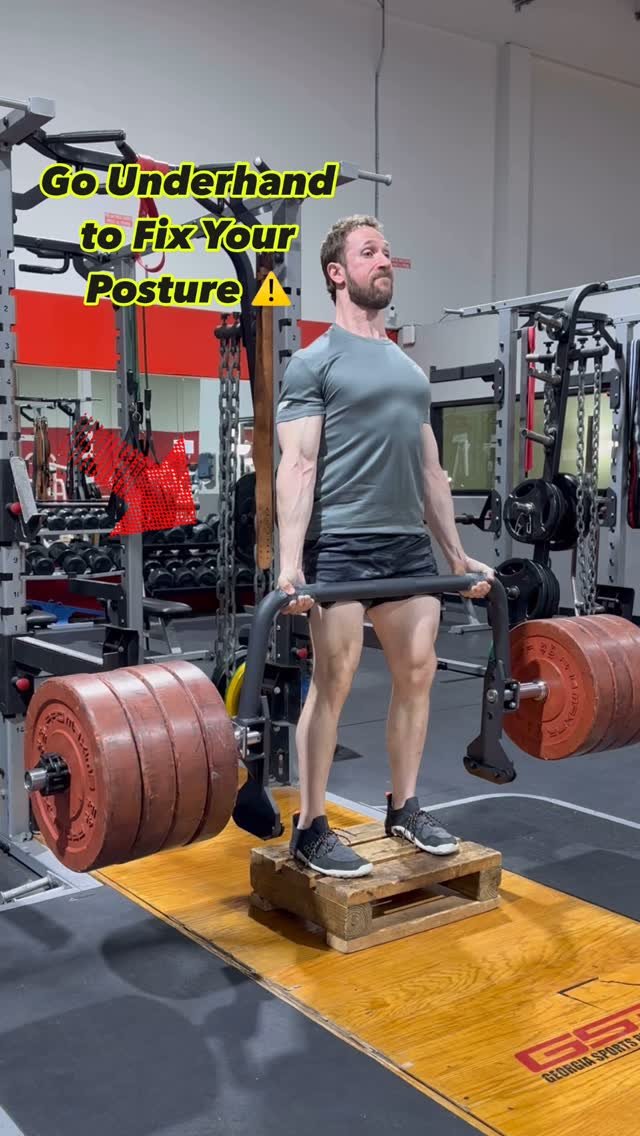
The barbell Zercher squat is an incredibly effective lower body exercise. However it also has its share of downfalls. Here's how to use kettlebells and landmine stations to improve the effectiveness of this classic strength exercise.