


Fix Your Goblet Squats With Reactive Neuromsucular Training
Dr. Joel Seedman, Ph.D.
Want to fix your squat mechanics? Try incorporating reactive neuromuscular training (RNT) into your goblet squats as demonstrated by my awesome client Matt Jordan.
The goblet squat is one of the most simple yet effective exercises for grooving proper squat technique and lower body mechanics. Unfortunately many individuals have a tendency to perform them incorrectly thereby reinforcing dysfunction and faulty activation patterns into their CNS that can negatively impact all other lower body movements. Ironically the goblet squat is frequently used as a corrective movement for the squat pattern. However, the opposite often occurs due to a variety of movement aberrations.
A very common issue many athletes including advanced lifters run into during goblet squats is neglecting to sit back into their hips and allowing excessive anterior knee drift to occur. While the goblet squat does involve a slightly more upright and quad dominant position than many other squats (due to the anterior loading protocol) it’s still just as critical that the lifter sit back into their heels, hips, and glutes. This is accomplished by incorporating a very slight hip hinge throughout without letting the chest actually tilt over.
By performing goblet squats with RNT resistance and band tension that’s attempting to drive your hips, knees, and lower body in the anterior direction you’re essentially feeding this dysfunction. As a result the lifter is required to sit back into their heels and hips to resist these forces thereby eliminating the common anterior knee drift and over-quad dominant positions.
This variation also helps eliminate the all-too-common problem of bending over at the waist excessively (i.e. chest tilting over) rather than sitting straight down. That’s because the lifter can use the band resistance to lean slightly against thereby reinforcing more vertical force vectors.
This is also an excellent variation for any individual with knee issues or low back problems as the horizontal band resistance helps alleviate pressure off both of these areas.
Lateral Variations
If an individual tends to favor one leg, this same RNT method can be used to correct this. Simply have them face laterally from the anchor point of the band so that the tension is coming from the side rather than the front. For instance if an individual leans more so into their right leg when squatting, they could set up so that the band is looped around the left side of their hip and pulling them to the right (force vector is in the right side direction). To resist being pulled excessively to their right leg (the side they tend to favor), they’ll be required to shift more tension to the left leg to create a square and symmetrical squat position.
Interesting Side Note
If you look closely in the video, you’ll notice a very slight hitch at the beginning of Matt’s squat right as he’s beginning his eccentric descent. While a portion of this is a result of resisting the anterior horizontal forces produced from the band, some of this was also a result of Matt over-hinging the hips which actually creates excessive strain on the low back and hips. This occurred largely because Matt’s primary problem in the past on squats was that he was too knee dominant and relied excessively on his quads.
As a result of addressing this compensation, he over-corrected the issue. Unfortunately this can create it’s own set of issues. However, we’ve recently addressed this subtle flaw by ingraining the notion that the hips and knees must bend simultaneously with natural not excessive hip hinge. We did this by slowing his squat down and using more controlled eccentric isometrics as well as video analysis.
So what’s the take home message? Don’t over correct a movement aberration. Correct and cue it to the point that the movement becomes optimal not extreme. Don’t correct it to the extent that you develop dysfunction and aberrations in the opposite direction of the prior flaw.
To learn more about implementing unique squats into your training routine check out my Complete Templates.

Everyone squats the same regardless of individual differences and joint anthropometrics. A proper squat involves 90 degree joint angles and is most easily obtained by using eccentric isometrics with perfect posture and body alignment. Here are 101 truths everyone should know.

The sissy squat has recently gained quite a bit of popularity in mainstream fitness and bodybuilding. Unfortunately it’s not only an inferior quad and thigh builder that lacks proper muscle stimulation, it destroys the knees. Here are 12 superior alternatives to sissy squats.

Fitting upper body isolation exercises into your training routine can be tricky particularly when you’re looking to emphasize larger compound movements in your lifting program. Here are my favorite ways to crush your arms while saving time and improving functional performance.

Offset loading training is one of my favorite strength training techniques not only for eliminating imbalances, asymmetries, and muscle dysfunction, but also for building ridiculous levels of functional strength, hypertrophy, motor control, and core stability. Read more here.

Although I use a variety of squats and lower body drills with my clients particularly eccentric isometrics, there’s one squat variation I tend to use with just about every client due to its simplicity and effectiveness - namely, the front curled squat.

The belt squat is an amazing exercise that crushes the legs and you can make it even better by combining it with front rack kettlebell squats and goblet squats. Here are multiple variations you can use to induce functional mass in the legs.

Looking for a quick solution for fixing improper foot and ankle mechanics? Look no further than the “bridge the gap” method. Here’s how to apply it to your favorite single leg movements as well as squats, deadlifts, lunges, and hinges for optimal lower body function.

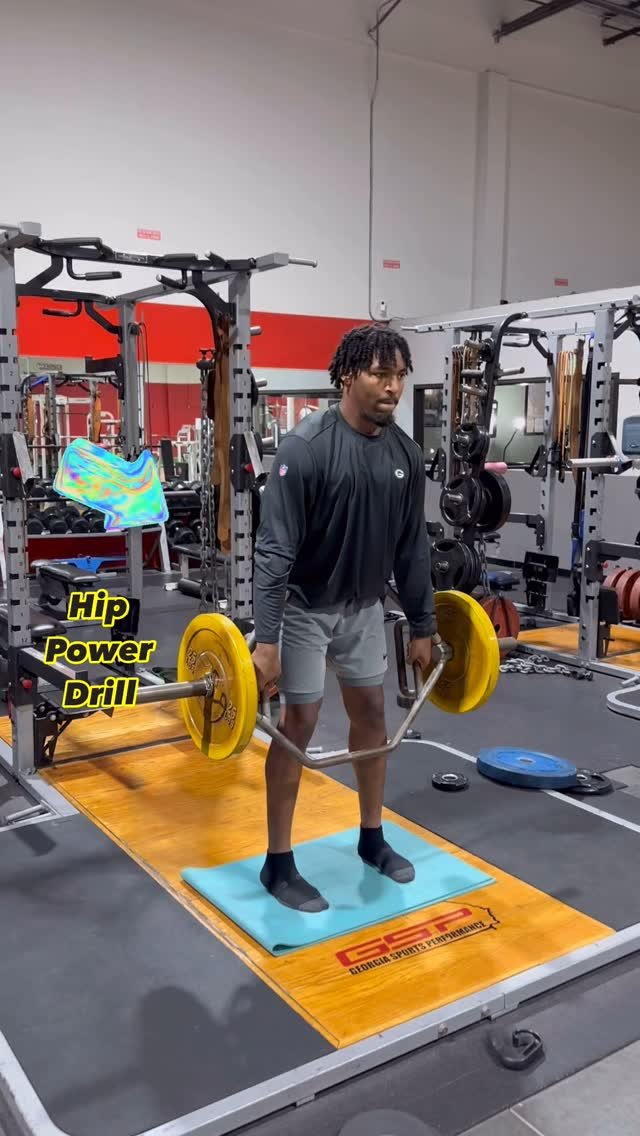
Combining the trap bar with accommodating resistance in the form of band assistance, band resistance, and chains produces some incredibly potent movements particularly when it comes to deadlifts, squats, hinges, lunges, and more.

The squatting lat pulldown is not only one of the most effective upper back and lat exercises for building functional strength and size but it also does wonders for cleaning up pullup and lat pulldown technique. Here’s how to perform them.

PurMotion offers some of the most unique and versatile pieces of strength training equipment in the industry. In fact, many of the exercises can’t be replicated with any other training tools. Here’s a review of some of my favorite PurMotion products.

The ball-to-the-wall overhead press is one of the most effective and safe shoulder pressing exercises there is. In many ways it’s even safer than the landmine press for overhead athletes. Here’s why it’s so effective and how to progress it.

Eccentric accentuated training can be a bit tricky when applying it to lower body strength training. Here’s how to apply the bilateral assisted negative accentuated (BANA) 2:1 method to squats, split squats, and lunges for strong and massive legs.

Two of my favorite strength training tools are the landmine and the trap bar. Here's how to combine both of these awesome and versatile training tools to create some amazing full body exercises.

Want to know why extended eccentric isometrics using 90-degree squat mechanics are so effective for dialing in your squat form? Read this article but be prepared to change your mindset and thought process on what proper squat form entails.

If you're looking for a unique training protocol that not only improves muscle activation and body mechanics but can also be applied to every movement pattern there is, you'll want to give the offset angle training method a try.

Kettlebells are one of the best tools for performing a variety of movements including deadlifts, squats, rows, lunges, and more. Unfortunately the ability to overload the muscles adequately can compromise their effectiveness. Here's how to resolve that.

The Smith machine gets a bad rap in the fitness industry. In fact, I rarely use it with my athletes. The one exception to this rule is the bilateral assisted negative accentuated training protocol (BANA) as it's one of the most effective methods there is.

Want to fix your squat technique? Try incorporating reactive neuromuscular training (RNT) into your goblet squats. This is one of most simple yet effective methods for grooving proper squat technique and lower body mechanics into your CNS.

Zercher squats often feel natural and comfortable on the body particularly with lighter loads. However, once you start moving heavier weights they can be quite uncomfortable. Here's how to aleviate this problem while also crushing your legs.

If you want to improve your squat mechanics and lower body muscle function almost immediately, you'll want to give this longitudinal goblet squat a try immediately. As an added bonus they're brutally difficult and crush the entire body.

If you're looking for a method that literally forces you to master your squat mechanics and perfect your form, look no further than this no-hands barbell squat protocol. It can also be used on lunges and good mornings to dial in lower body mechanics.

The landmine front squat is a great lower body exercise. Unfortunately there are several common issues lifters frequently face when performing them. Here are several unique variations to work around that and make the landmine squat even better.

If you're looking for a unique and relatively simple method for crushing your legs and upper back, you'll want to try out the longitudinal hanging barbell protocol. It's also a very natural and safe method for hitting squats, deadlifts, and rows.

If you're looking for a method that allows you to overload the daylights out of squats, deadlifts, hinges, and rows, while also minimizing stress to the spine and low back, look no further than the hanging trap bar method. Here's how to do it.

In this post I'll be highlighting a very unique trap bar exercise that represents an excellent substitute for the traditional goblet squat. Just be prepared to exert some serious effort as these torch nearly every muscle in your body from head to toe.

By placing the trap bar on your shoulders you can turn the trap bar into a cambered squat bar. This particular squat variation provides 10 benefits that are difficult to replicate with any other training tool including traditional cambered squat bars.

The kickstand squat is one of the most effective squat variations for torching the glutes, quads, hamstrings, and lower body stabilizers. Unfortunately it often goes largely unnoticed in the fitness industry. Here's how to perform it plus benefits.
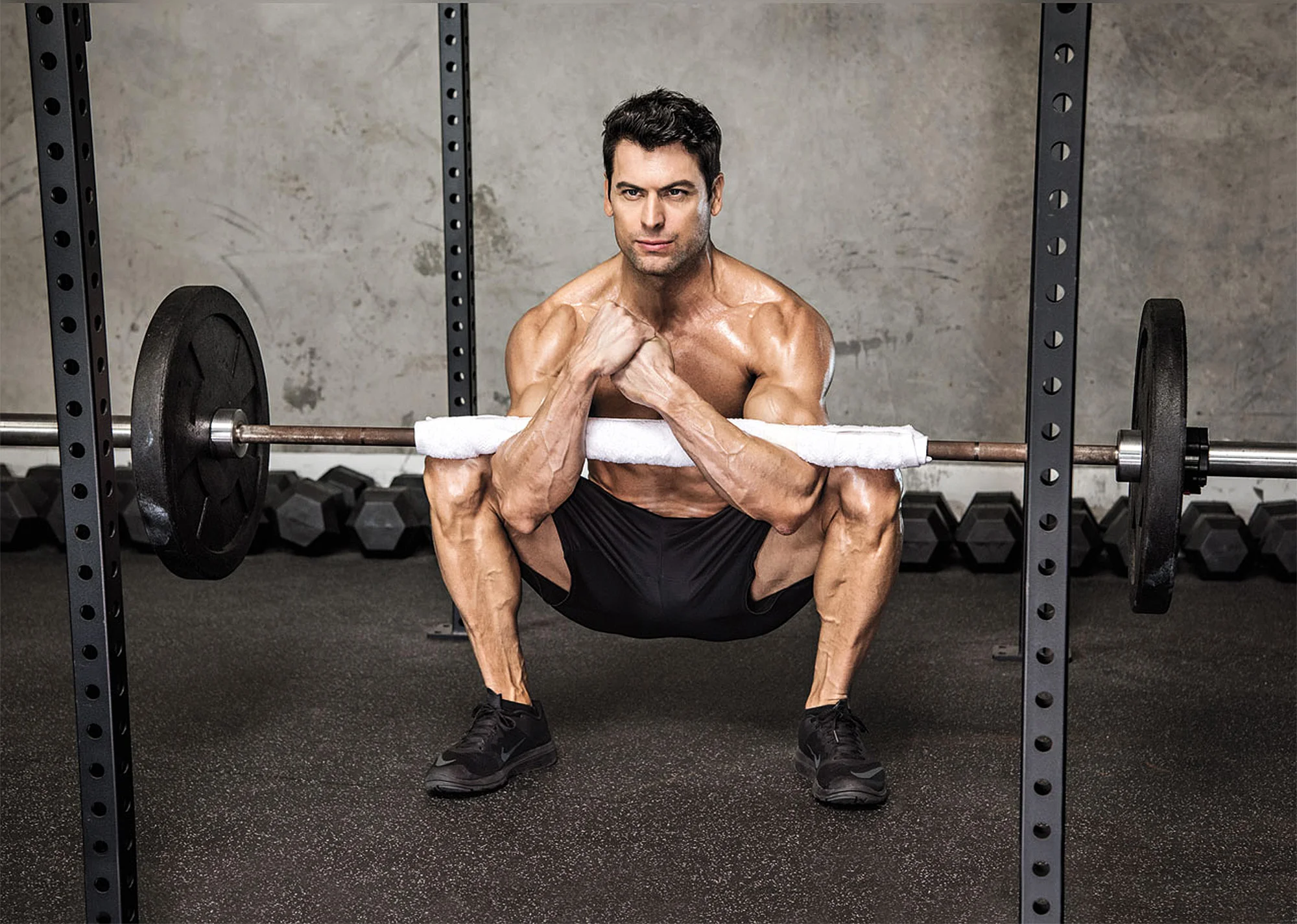
Zercher Squats, Zercher good mornings, and Zercher lunges are some of the best exercises for crushing the musculature of the legs. However, many individuals suffer with poor mechanics on these. Here's how to use the trap bar to resolve this.

Zercher squats are one of the best lower body variations not only for ingraining proper squat mechanics but also for crushing the legs, upper body, and core. By adding accommodating resistance you can make the stimulus even more effective. Here's how.



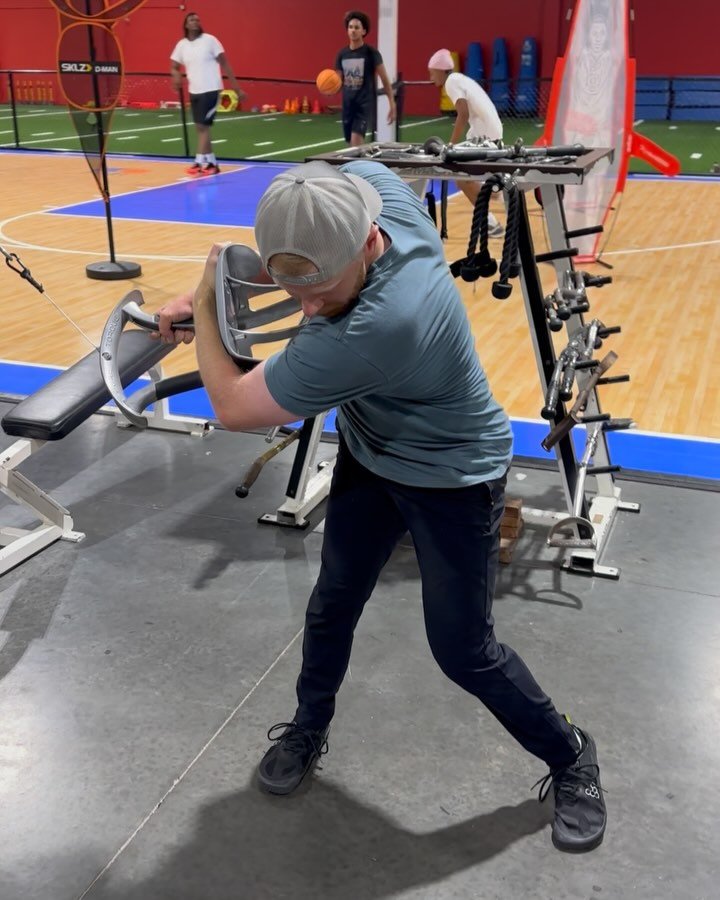
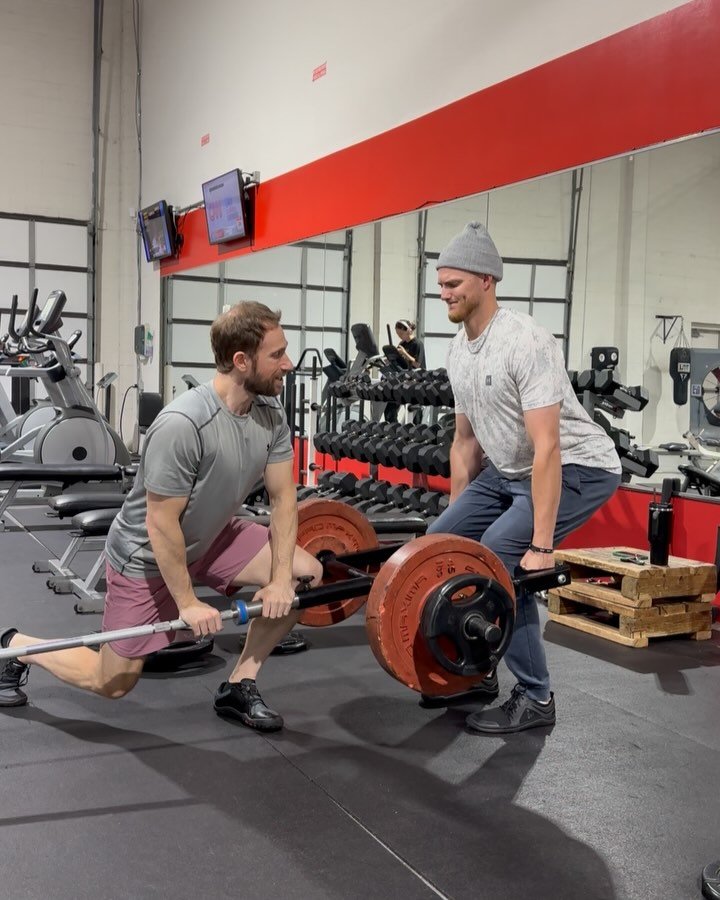
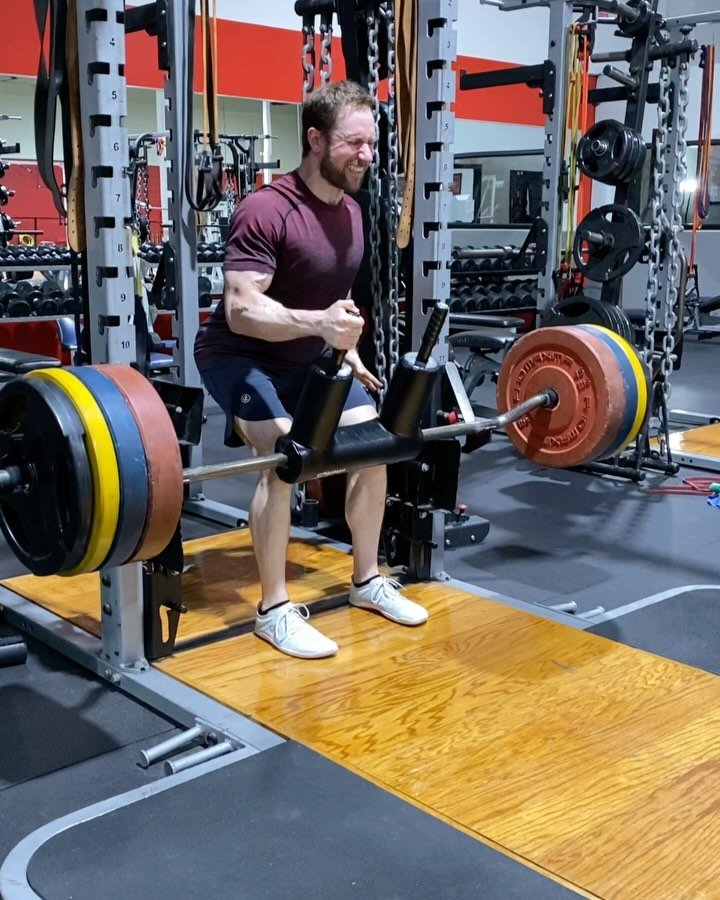
The barbell Zercher squat is an incredibly effective lower body exercise. However it also has its share of downfalls. Here's how to use kettlebells and landmine stations to improve the effectiveness of this classic strength exercise.